Skincare Comparison
We Tested the 5 Most Popular Methods for Reducing Under-Eye Bags. Only
One Actually Worked.

From $12 drugstore creams to $800 Botox appointments, we put every major
under-eye approach through a simple test: does it actually reach the
root causes? The results surprised us.
If you've been dealing with under-eye bags, dark circles, or that
hollow, tired look that seems to get worse every year, you've probably
already tried something. Maybe a few things. Maybe a lot of things.
Eye creams, patches, jade rollers, serums with ingredients you can't
pronounce. Maybe you've even considered Botox or fillers.
And you've probably noticed that
most of them don't actually work.
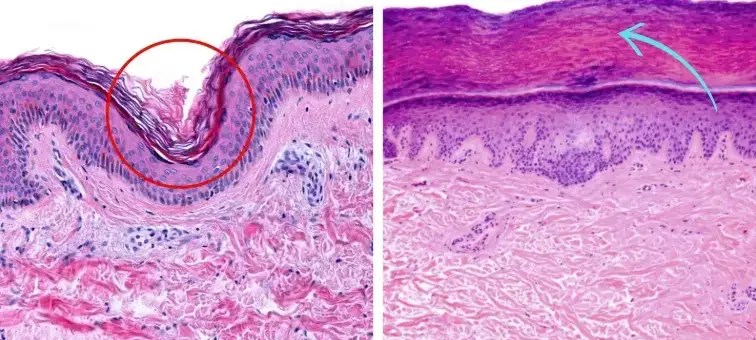
There's a reason for that. Recent dermatological research has confirmed
that under-eye bags are caused by three things happening
2-3mm beneath the skin's surface:
sluggish circulation (causing dark circles), impaired drainage (causing
puffiness), and weakening cellular support (causing hollowing and
sagging).
Any approach that can't reach all three of those causes is, at best, a
temporary cover-up.
We wanted to find out which of the most popular methods actually
addresses what's going on underneath, and which ones are just expensive
disappointments. So we evaluated the five most common approaches women
over 40 are using today.
What we looked for
Before diving into the results, here are the four criteria we used to
evaluate each method. These aren't arbitrary. They're based on what
dermatological research says is required to actually reduce under-eye
bags long-term.
Criteria #1: Depth of Approach
Does it reach 2-3mm below the surface where the root causes live? A
solution that only works on the surface can't address circulation,
drainage, or structural support beneath the skin.
Criteria #2: Non-Invasive & Safe
Can you use it at home without needles, downtime, or medical
supervision? The best solution is one you'll actually stick with
long-term, not one that requires clinic visits and recovery days.
Criteria #3: Affordable Long-Term
What does this cost over 12 months? A one-time purchase is very
different from recurring appointments or products you burn through
monthly. The math matters.
Criteria #4: Clinically Researched
Is the technology behind this method backed by peer-reviewed science?
Marketing claims are not clinical evidence. We looked for methods with
real research behind them.
With these four criteria in mind, here's how each method performed.
The results: ranked from best to worst
Method #1
Our Pick
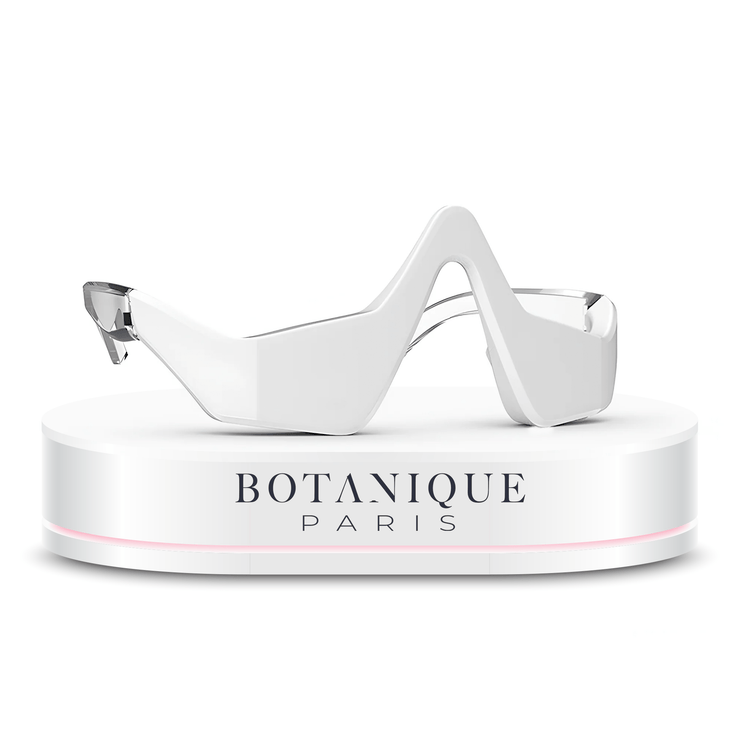
At-Home Red Light Therapy + EMS Microcurrent
Advantages
- Addresses all 3 root causes simultaneously
- Red light therapy backed by Nobel Prize research
- One-time purchase, no recurring costs
- 10 minutes a day, completely hands-free
- Non-invasive, zero downtime
Limitations
- Results take 2-3 weeks to become visible
- Only available online
This was the clear winner, and it wasn't close.
Red light therapy was first validated by Nobel Prize winner Dr. Niels
Ryberg Finsen in 1903, and over 5,000 peer-reviewed studies have since
confirmed that specific wavelengths of light can penetrate 2-3mm below
the skin to restart sluggish circulation and stimulate cellular
renewal.
But red light alone can't address the fluid buildup that causes
morning puffiness. That's where EMS microcurrent comes in. Gentle
electrical pulses reactivate the muscles and drainage system around
the eyes, moving the fluid that's been sitting there overnight.
The only device we found that combines both technologies in a
single, at-home device is RevitalEyes by Botanique Paris.
You put them on for ten minutes, press one button, and both
technologies work on all three root causes while you relax. It's the
only method we tested that performed strongly on every single
criterion.
The brand also offers a 120-day return window, which gave us enough
time to actually evaluate long-term results rather than just first
impressions.
Check Availability
120-day money-back guarantee · Free shipping
Method #2
Botox & Injectable Fillers
Advantages
- Cosmetically masks the appearance quickly
Limitations
- $400-$800 per session, every 3-6 months
- Needles, bruising, swelling, potential nerve damage
-
Known side effects: headaches, drooping eyelids, muscle weakness
- Results wear off completely without maintenance
-
Does not address circulation, drainage, or root causes at all
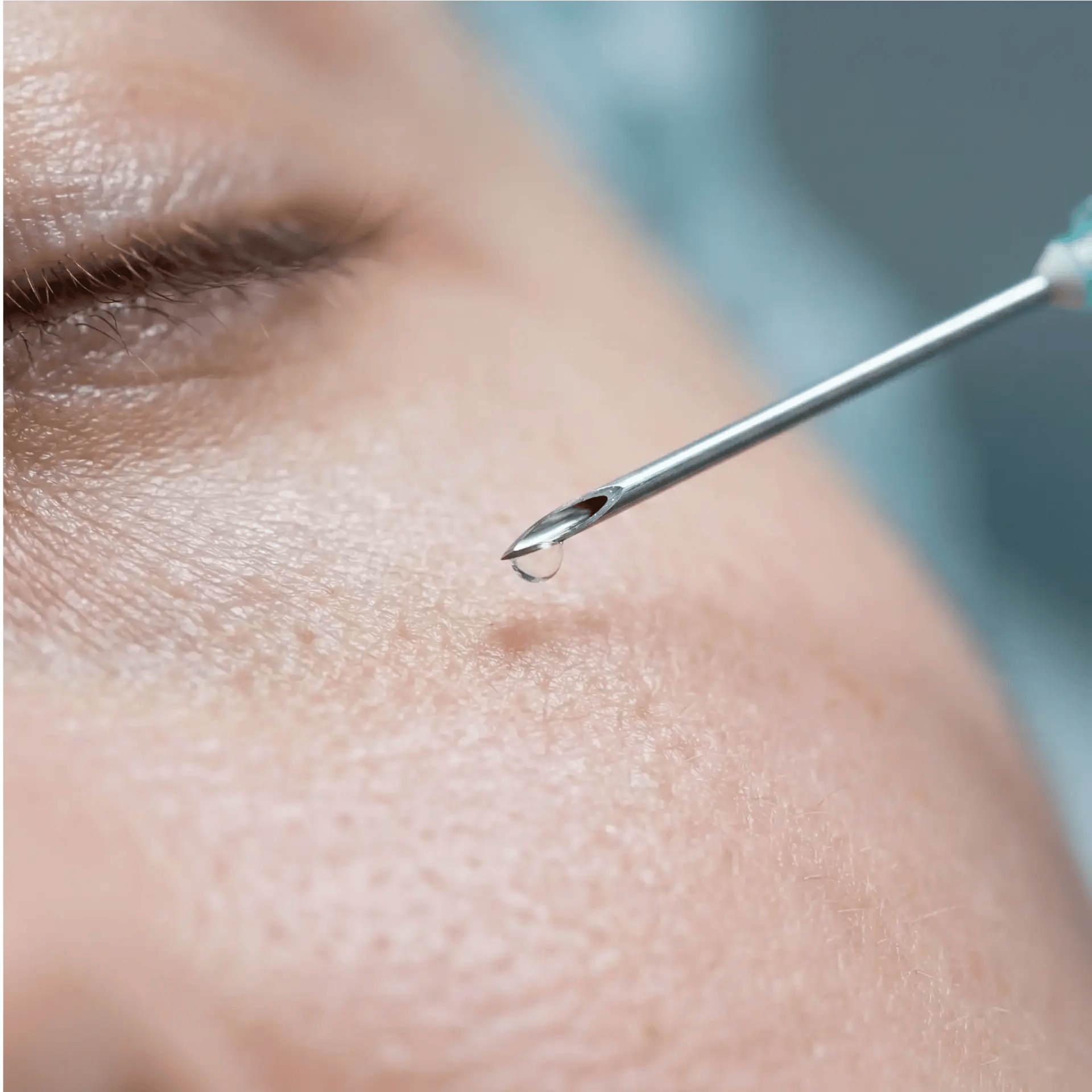
Let's be clear: Botox and fillers do not address the root causes of
under-eye bags.
They don't restart circulation, they don't improve lymphatic drainage,
and they don't rebuild weakening cellular support. What they do is
temporarily paralyze muscles or inject volume beneath the skin to mask
the visible symptoms. The underlying problem continues to worsen.
Beyond the fact that it's purely cosmetic masking, there are real
health considerations. Botox is a neurotoxin. Common side effects
include headaches, bruising, swelling, and in some cases drooping
eyelids or muscle weakness that can last weeks. Rare but documented
complications include difficulty swallowing, blurred vision, and
allergic reactions. And because the effects wear off every 3-6 months,
you're exposing your body to these risks repeatedly, at a cost of
$1,600-$3,200 per year,
for results that disappear the moment you stop.
Method #3
Eye Creams & Serums
Advantages
- Widely available, easy to use
- Some provide temporary hydration
Limitations
- Cannot penetrate 2-3mm beneath the surface
- No effect on circulation, drainage, or structure
- $30-$150/month for premium brands
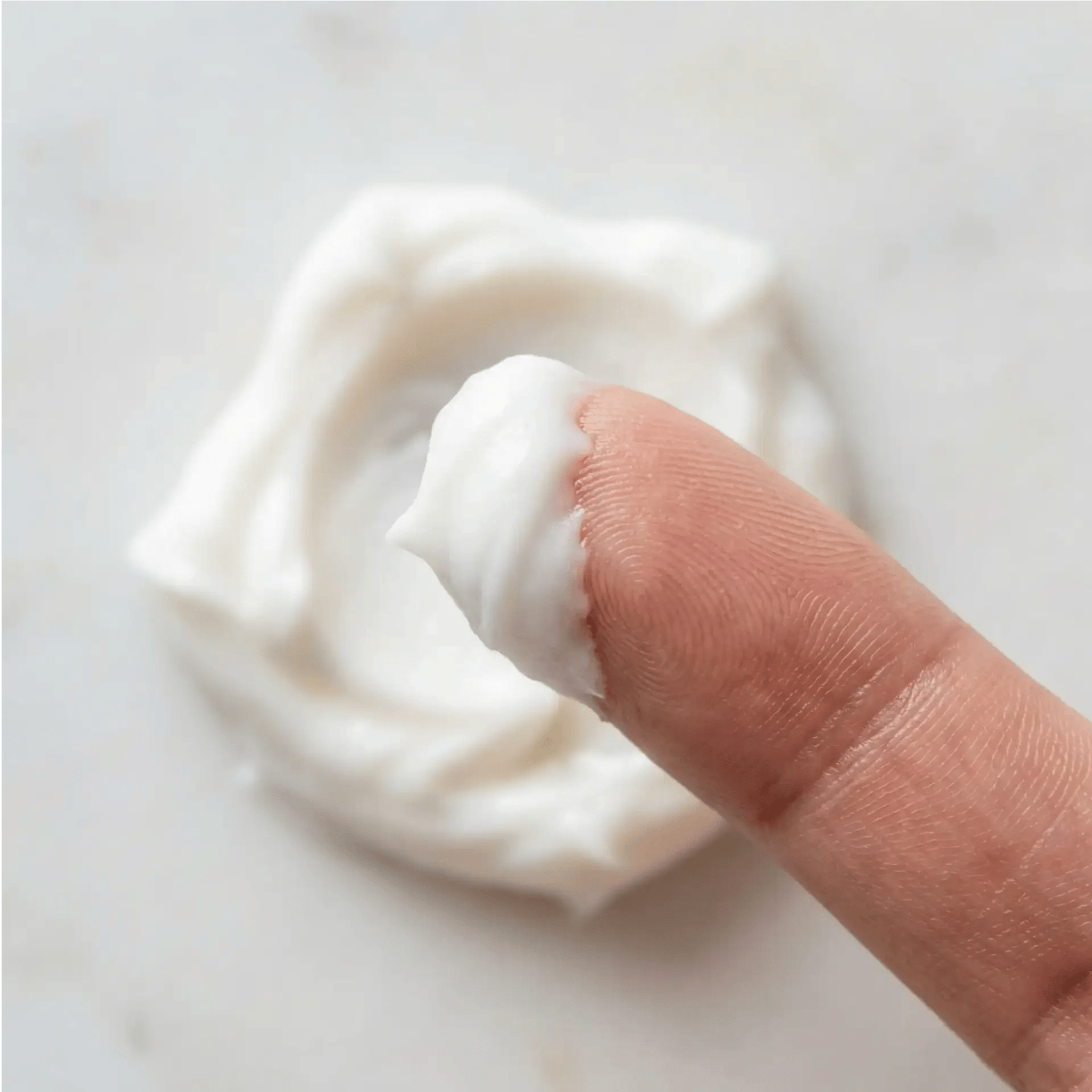
This is what most women try first,
and what most women are still stuck on. Eye creams can hydrate the
surface and temporarily reduce the appearance of fine lines, but they
physically cannot reach the three root causes happening 2-3mm below.
It doesn't matter if the cream costs $12 or $200. The molecules are
too large to penetrate to the depth where the actual problems live.
Creams work great as a complement to something that's working
underneath. On their own, they're surface-level at best.
Method #4
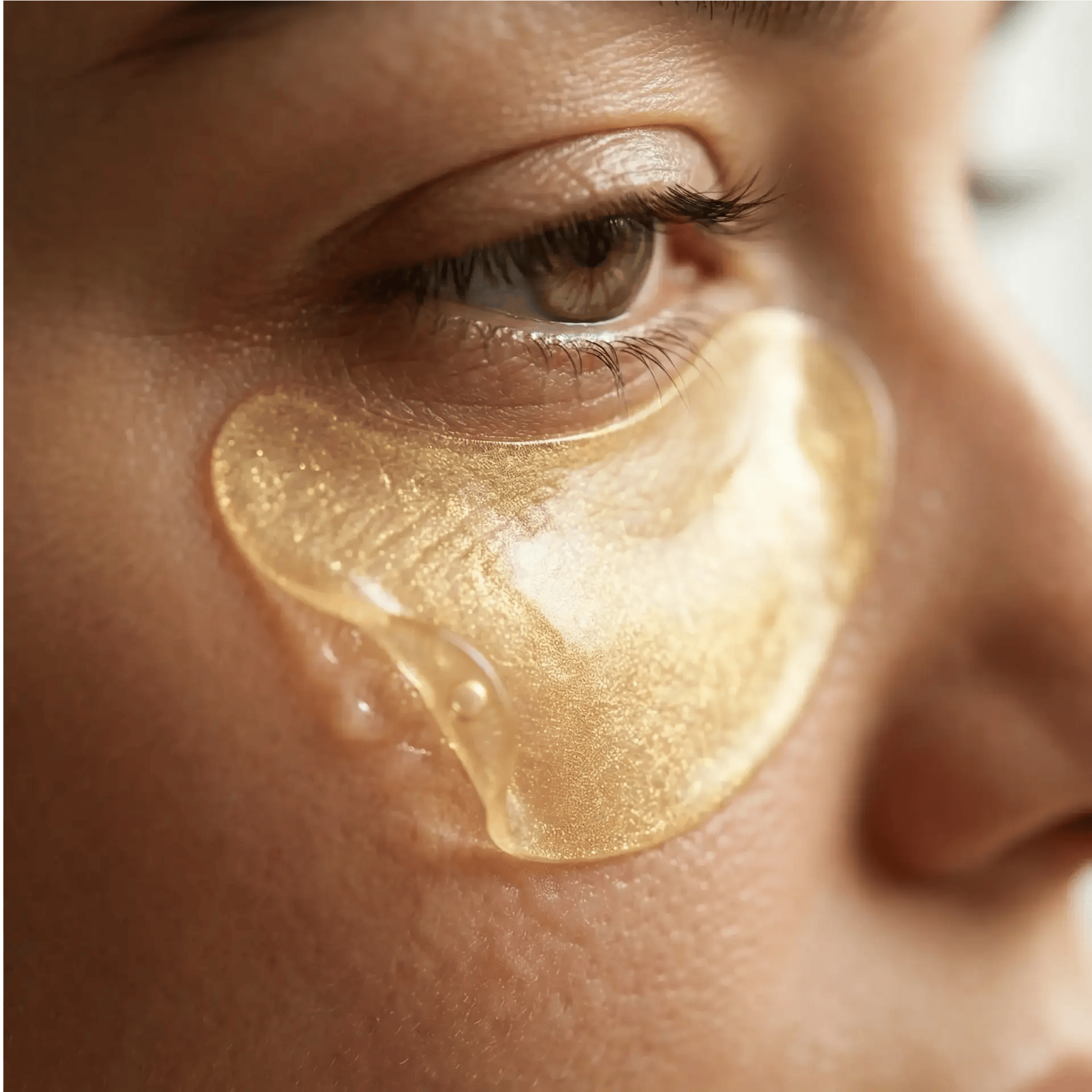
Under-Eye Patches & Masks
Advantages
- Feels nice, temporary cooling/tightening
- Good for special occasions
Limitations
- Effects disappear within hours
- Single-use, creates waste and ongoing cost
- Zero effect on root causes
Under-eye patches are popular on social media but deliver almost
nothing long-term.
The cooling sensation and temporary tightening can make your skin look
slightly better for a few hours, usually just enough for a photo. But
patches suffer from the same fundamental problem as creams: they sit
on the surface. No patch can restart circulation, drain fluid buildup,
or rebuild weakening support structures 2-3mm below. At $2-$5 per use,
the cost adds up quickly for something that's gone by lunchtime.
Method #5

Facial Rollers & Gua Sha
Advantages
- Affordable one-time purchase
- Can temporarily move surface fluid
Limitations
- Requires consistent manual technique
- Pressure is too light to reach root causes
- No effect on circulation or cellular support
- No clinical evidence for anti-aging benefits
Jade rollers and gua sha tools are affordable and feel pleasant,
but the clinical evidence for their effectiveness on under-eye bags is
essentially nonexistent. Manual rolling can temporarily move surface
fluid and reduce very mild puffiness, but the pressure from a handheld
tool simply can't reach the depth where the three root causes live.
They also require proper technique, and most women either press too
hard (risking bruising the delicate under-eye skin) or too light
(achieving nothing). For mild, occasional puffiness they're fine. For
real under-eye bags, they're not the answer.
Our conclusion
After evaluating all five methods against objective criteria,
at-home red light therapy combined with EMS microcurrent was the only
approach that addressed all three root causes of under-eye bags.
Botox may produce a quick cosmetic change, but it's purely masking — it
doesn't address a single root cause, comes with real side effects, and
costs thousands per year for results that vanish the moment you stop.
Creams, patches, and rollers simply can't reach the depth where the
actual problems live.
The one device that combined both technologies in an at-home format,
with real clinical research behind it and a return policy long enough to
actually judge results, was RevitalEyes.
Best Overall Method
RevitalEyes by Botanique Paris
- Addresses all 3 root causes at once
- Backed by Nobel Prize-winning science
- 10 minutes a day, completely hands-free
- One-time purchase, no recurring costs
- Includes complimentary eye renewal cream
- 120-day money-back guarantee
Try RevitalEyes Risk-Free
120-day guarantee · Free shipping · Complimentary eye cream included
Frequently asked questions
I've already spent hundreds on eye creams and devices. How is this
any different?
Most products only work on the surface of the skin. That's not a
design flaw, it's a physical limitation. Creams can't reach 2-3mm
deep. Rollers can't restart your body's circulation or drainage
systems. RevitalEyes delivers two technologies, red light therapy
and EMS microcurrent, that reach beneath the surface where the
three root causes actually live. It's not a better cream. It's a
completely different approach.
Is 10 minutes a day really enough to see results?
Yes. The wavelengths used in red light therapy and the frequency
of the EMS microcurrent are calibrated to deliver a therapeutic
dose within that time. More isn't necessarily better with light
therapy. The key is consistency. Most women report visible changes
within 2-3 weeks of daily use.
Does it hurt or feel uncomfortable?
Not at all. The red light produces a gentle warmth, and the EMS
microcurrent feels like a soft, rhythmic hum against the skin.
Most women describe it as relaxing, almost like a mini spa
treatment. There's no zapping, no stinging, and no downtime.
How long do results last compared to Botox?
Botox doesn't address root causes at all — it temporarily
paralyzes muscles to mask visible symptoms. Results disappear
completely within 3-6 months, and each session exposes your body
to a neurotoxin with documented side effects. With RevitalEyes,
you're actually restarting circulation, improving drainage, and
supporting cellular renewal. The improvements build on each other
rather than wearing off.
What if it doesn't work for me?
The manufacturer offers a 120-day money-back guarantee, which is
significantly longer than the industry standard. That gives you
four full months to evaluate whether you're seeing real results
before committing. If not, you return it for a full refund.
Can I use it with my existing skincare routine?
Absolutely. In fact, using RevitalEyes before applying your eye
cream can actually improve absorption. Once the red light and EMS
have done their work beneath the surface, topical products can do
a better job on top. Many women use it as the first step in their
morning routine.
Red Light Eye Lift is an independent editorial publication covering
developments in beauty, skincare, and science-backed wellness. Our
editorial team researches emerging technologies and methods to keep
readers informed about options in personal care. This article contains
affiliate links, meaning we may earn a commission if you make a purchase
through the links provided, at no additional cost to you. This does not
influence our editorial coverage.
Medical Disclaimer
The information provided in this article is for general informational
and educational purposes only and is not intended as, and shall not be
understood or construed as, medical advice, diagnosis, or treatment.
Always consult with a qualified healthcare professional before starting
any new skincare regimen or using any device, particularly if you have
pre-existing medical conditions. Individual results may vary. The
statements made regarding these products have not been evaluated by the
Food and Drug Administration. These products are not intended to
diagnose, treat, cure, or prevent any disease. Results described are not
guaranteed and may differ from person to person depending on individual
circumstances, consistency of use, and other factors.
© 2026 Red Light Eye Lift.
